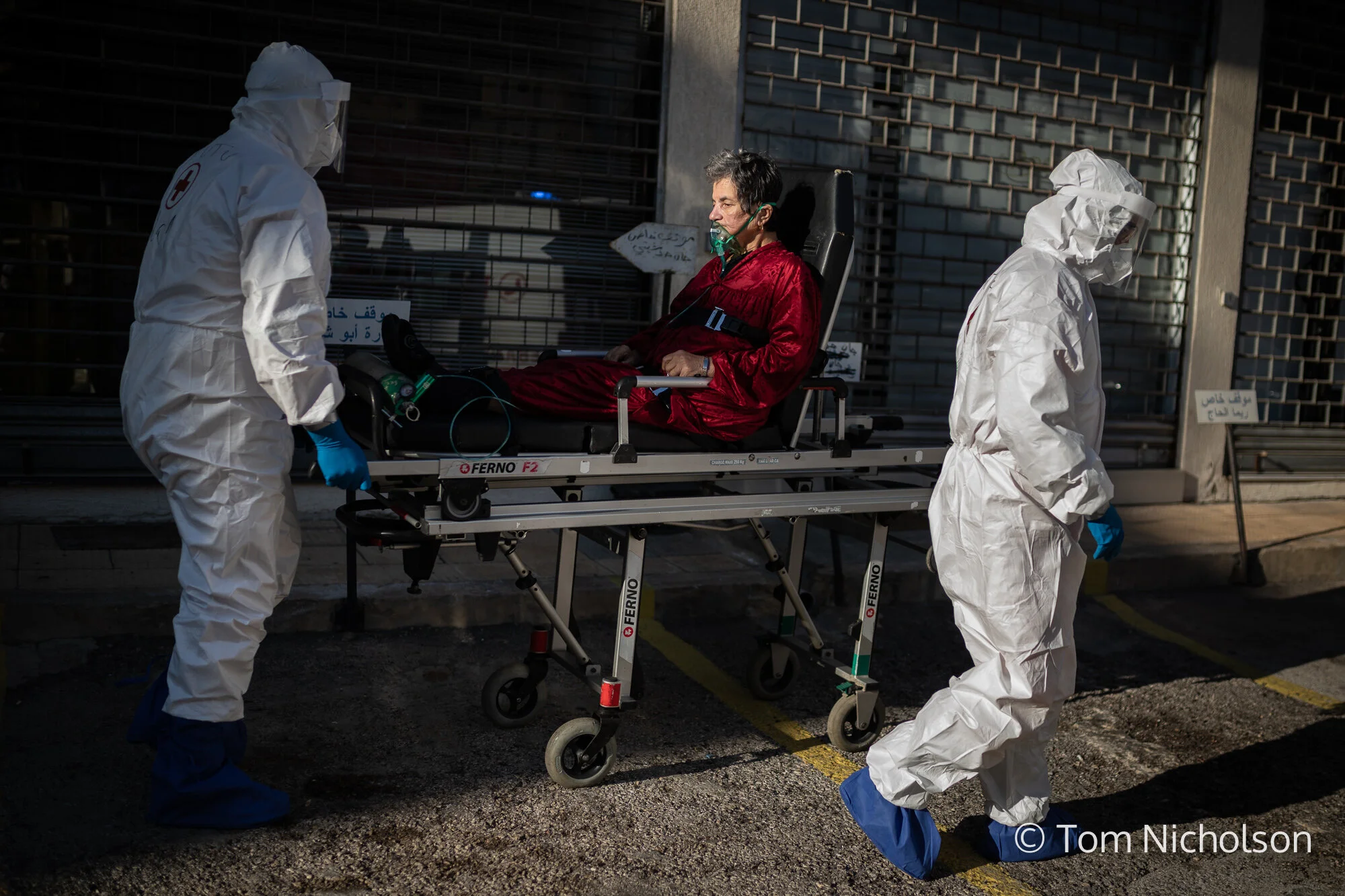
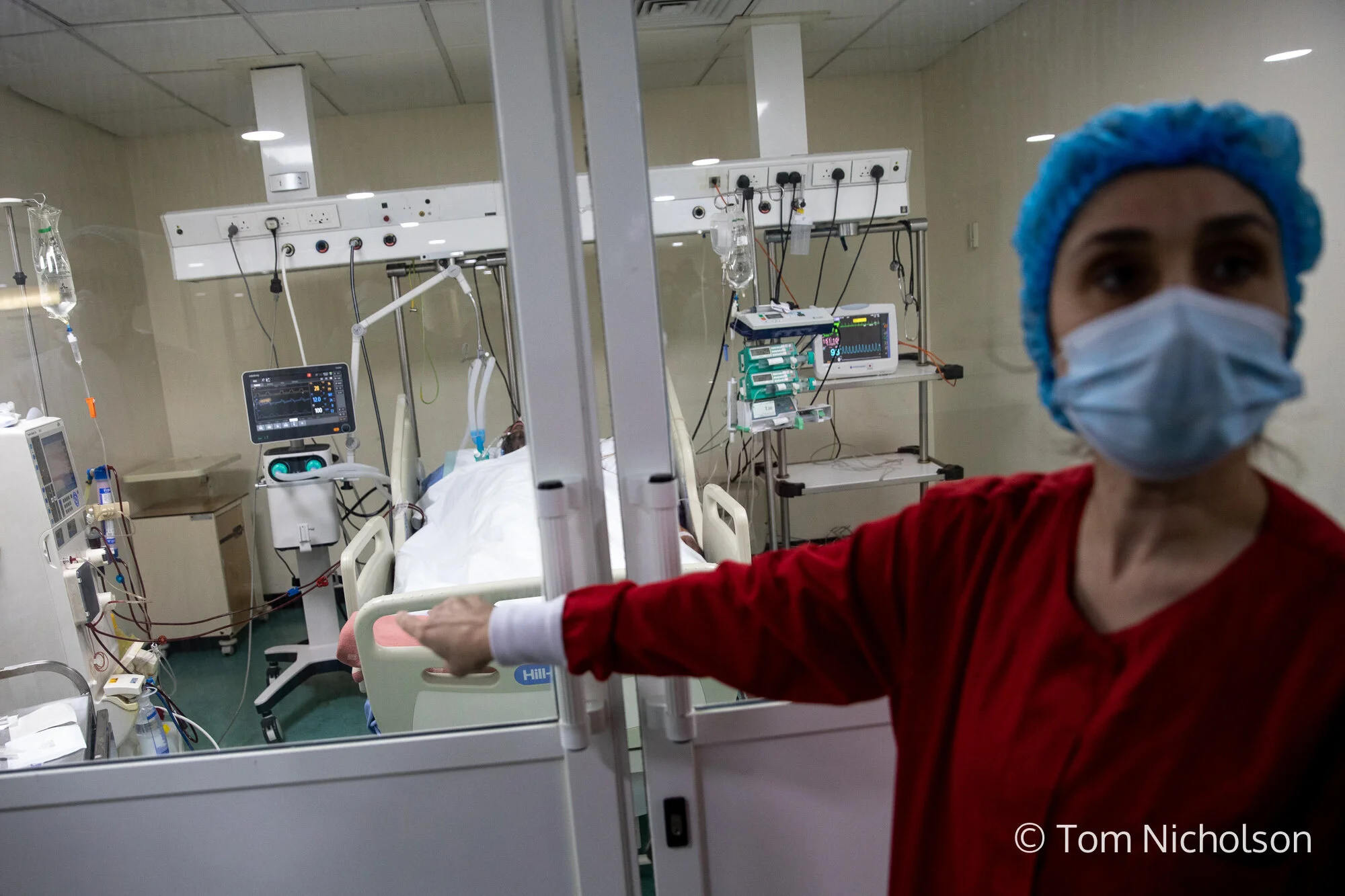
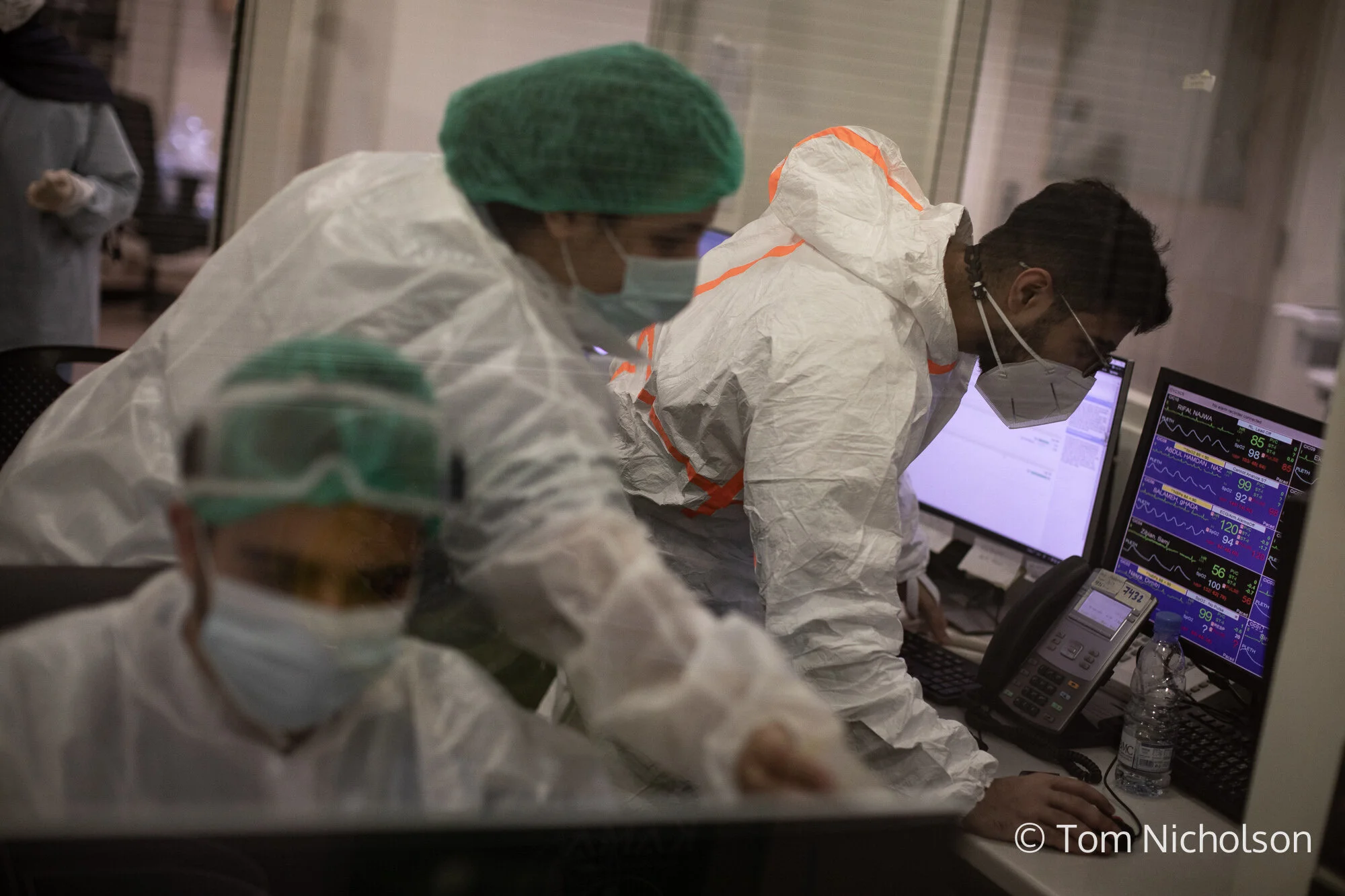
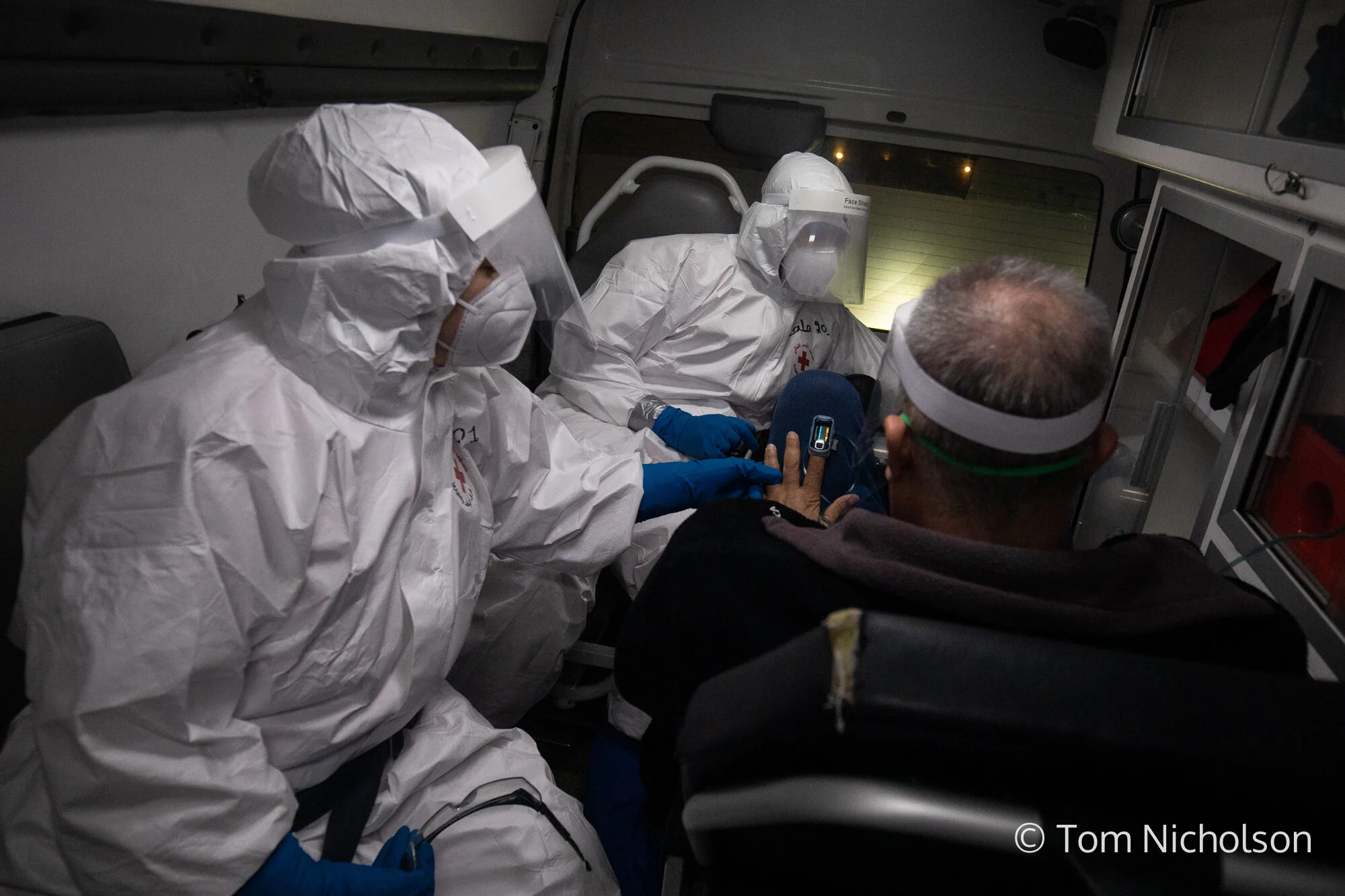
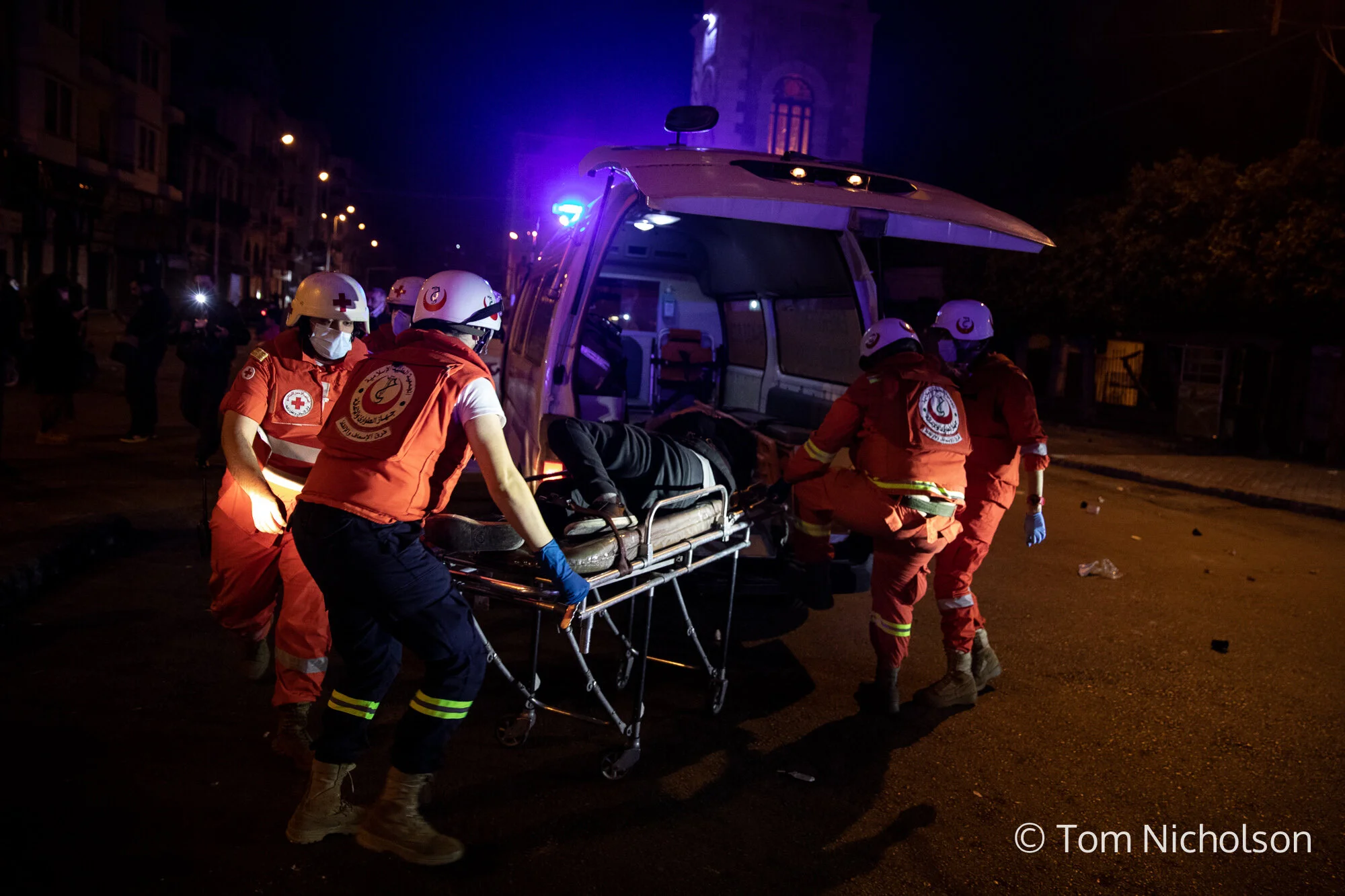
Over Christmas and New Year 2020, COVID-19 Coronavirus lockdown restrictions were eased, with many people enjoying bars, restaurants and nightclubs. As a result, infection rates skyrocketed, and Intensive Care Units such as those at the Rafik Hariri University Hospital and the American University of Beirut (AUB) Hospital were full to capacity for weeks. Volunteer paramedics from the Lebanese Red Cross were struggling to find space in hospitals for their patients. Hospital emergency rooms were also full. A further lockdown ensued: a 24/7 curfew for 25 days - one of the strictest lockdowns in the world. Many stayed at home, but some, living hand-to-mouth as a result of the crippling economy took to the streets in the Lebanon’s second largest city of Tripoli, in the north of the country. Demonstrators threw rocks and burned buildings and tyres, during clashes with the Lebanese Internal Security Forces (ISF) at the Serail, (headquarters of the Governorate of North Lebanon) and with the Lebanese Armed Forces (LAF) in the city. The ISF and LAF responded with live fire, teargas and water cannon. One man, 30-year-old Omar Farouq Taybah died during the clashes in Tripoli.